WHY WE RECOMMEND DENTAL SEALANTS
 By Dr. David Magid1 Minute Read
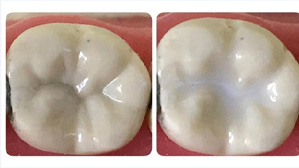
The chewing surfaces of our back teeth have lots hills and valleys comprised of many grooves, fissures and pits. So although they are great for chewing and tearing to make our food more digestible, food can get stuck in these areas. If this food happens to be processed or comprised mostly of sugar and the teeth are not properly cleaned, it will attract specific bacteria that would love nothing better than to eat those left over sugars and cause cavities.
A perfect example of this occurs when one eats an innocent little raisin. As the raisin is chewed some of the sticky fragments of raisin which contains concentrated amounts of sugars get all caught in the little holes on top of your teeth. And even when you brush your teeth afterwards the toothbrush can’t get into those miniscule cracks and fissures in your tooth and this is where cavities can start. And that is where sealants come in.
Sealants are a flowable resin that fills all these little nooks and crannies on the tooth surface thereby not giving any place for food to get stuck in. After the tooth is cleaned and rinsed, we carefully place the resin on the tooth so that it flows into all the areas so that there is no where for the food to hide. We then light cure the resin so that it hardens, and now the top of the tooth is sealed and protected. You can see in the before and after picture above how the sealant protects the tooth. Our sealants also happen to have the amazing additional added benefit of releasing fluoride into the tooth for additional protection.
Not only is this a great procedure for kids to protect their adult molars but this can also be done on adults as well. Treatment time for this procedure is usually around 15 to 20 minutes and there is no numbing or anesthesia involved. I feel if we have the materials and resources to prevent a cavity from forming why not use them and educate our patients about this? If you have any questions or are interested in getting this valuable preventive treatment for you or your family we would love to help in any way. Please give us a call at 973-227-9211 or email us at info@magiddental.com. We are also always available to be messaged on our facebook page: http://www.facebook.com/MagidDental
Blog Tags: Dentistry, Kids, Preventive, Protection, Sealants
About the Author
Dr. David Magid has more than 25 years of experience in dentistry and provides personalized care across general, cosmetic, and implant dentistry.
Dr. Magid combines comprehensive dental care with modern technology and an individualized approach to help patients maintain healthy, confident smiles.