
Dr. David Magid
DMD, AFAAID
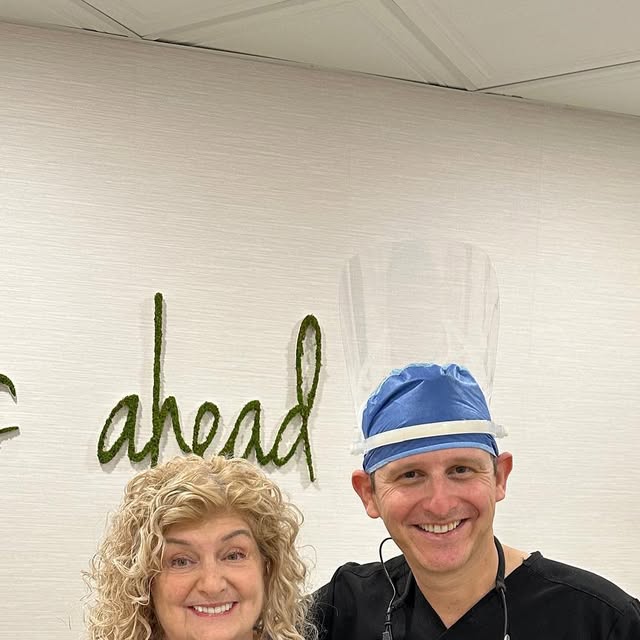
A University of Pennsylvania School of Dental Medicine graduate with more than 25 years in practice. He prepares, fits, and cements every bridge himself, and places the implants that support an implant bridge.
Learn MoreWest Caldwell, NJ
A dental bridge fills a gap of one to four missing teeth with replacement teeth anchored to the teeth beside it, or to implants. Dr. David Magid, DMD, places both kinds and tells you plainly which suits you better.
Dental Bridges
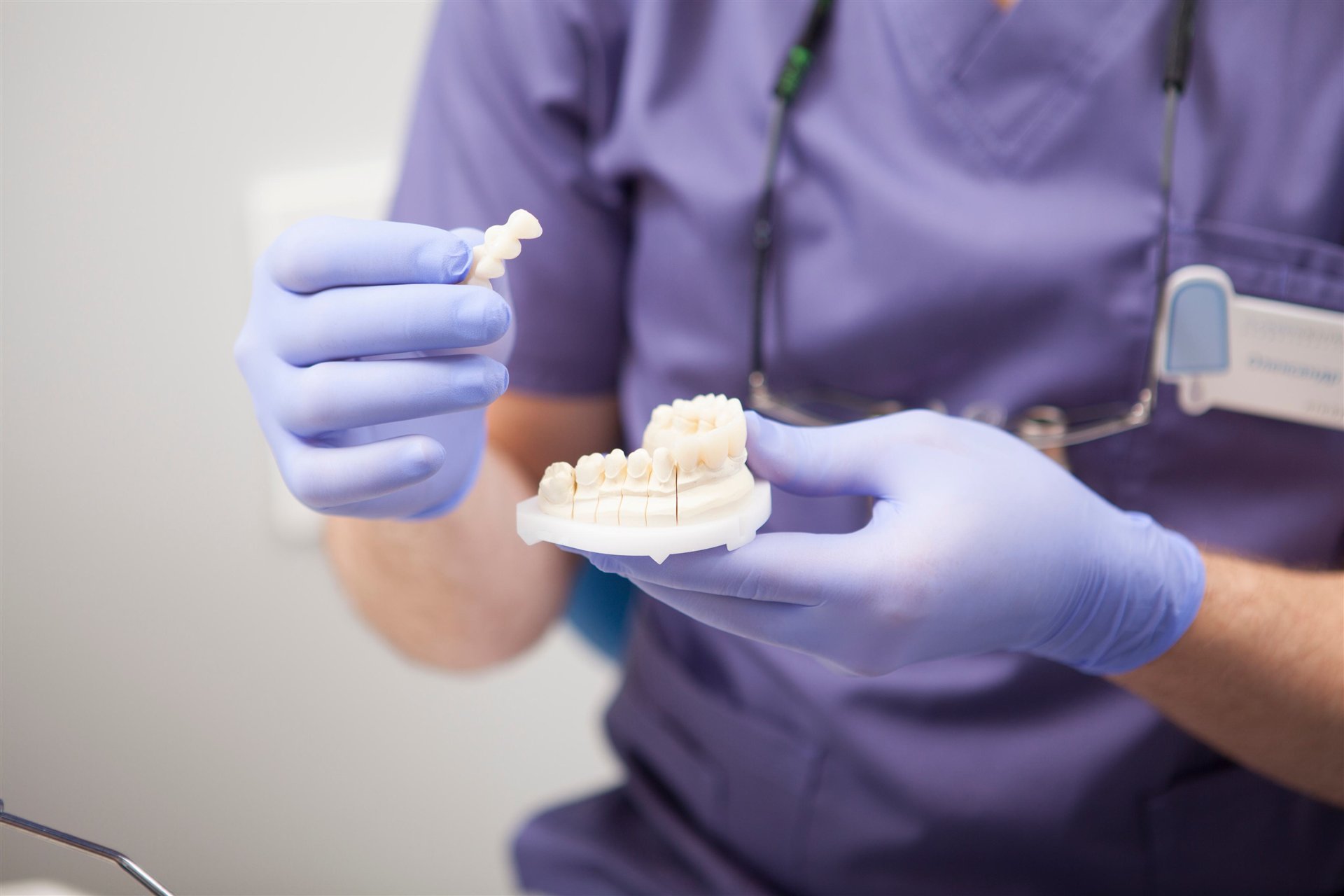
A dental bridge is a single piece of tooth-colored ceramic that replaces missing teeth by resting on supports at each end of the gap. In a traditional bridge, the supports are crowns on the natural teeth beside it, and in an implant bridge, they are crowns on implants. A bridge is fixed, so only a dentist removes it.
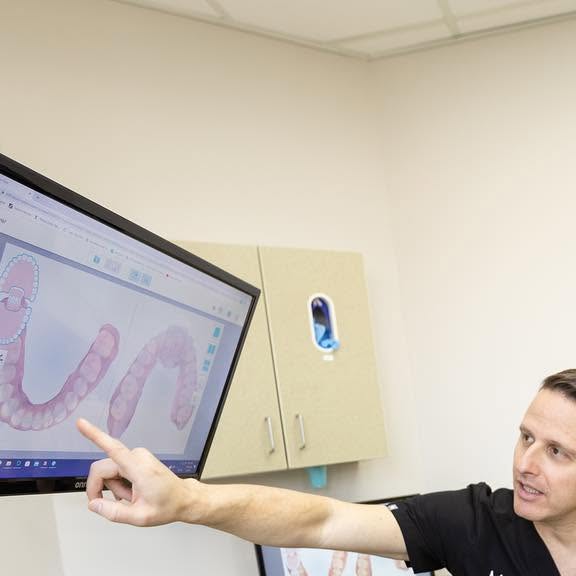
Dr. Magid helps you choose between a bridge and an implant at your exam, using an X-ray or 3D scan, and we do both here. A traditional bridge is usually 2 visits, with a temporary bridge in between. An implant bridge adds implant placement and a few months of healing.
Patient Education
For a single missing tooth with healthy neighbors, an implant is usually the better long-term choice because it leaves the neighboring teeth untouched and helps keep the jawbone from shrinking. A bridge is the better choice when the neighbors already need crowns, when bone is lacking and you would rather not graft, or when you need the gap filled in weeks at a lower upfront cost.
A bridge is faster and costs less upfront. An implant costs more and takes longer, but it protects the bone and does not rely on neighboring teeth. Dr. Magid shows you both on your own scan, with a quote for each, and the decision is yours.
A Different Dental Experience
One dentist places bridges and implants, so the advice is about your mouth, not a referral.
DMD, AFAAID
A University of Pennsylvania School of Dental Medicine graduate with more than 25 years in practice. He prepares, fits, and cements every bridge himself, and places the implants that support an implant bridge.
Learn More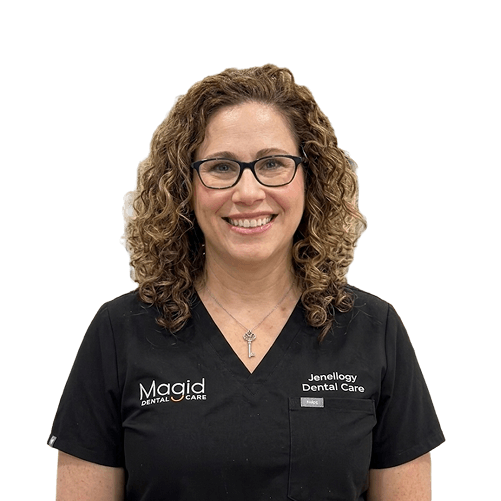
Dental Hygienist
With more than 25 years in dentistry, she's trained in diode lasers and shows you how to clean under your bridge and checks the anchor teeth at every cleaning.
Learn More
Office Manager
The first voice you hear. She checks your coverage and explains CareCredit and Cherry financing. Trained in dental assisting at Felician University.
Learn More

Options
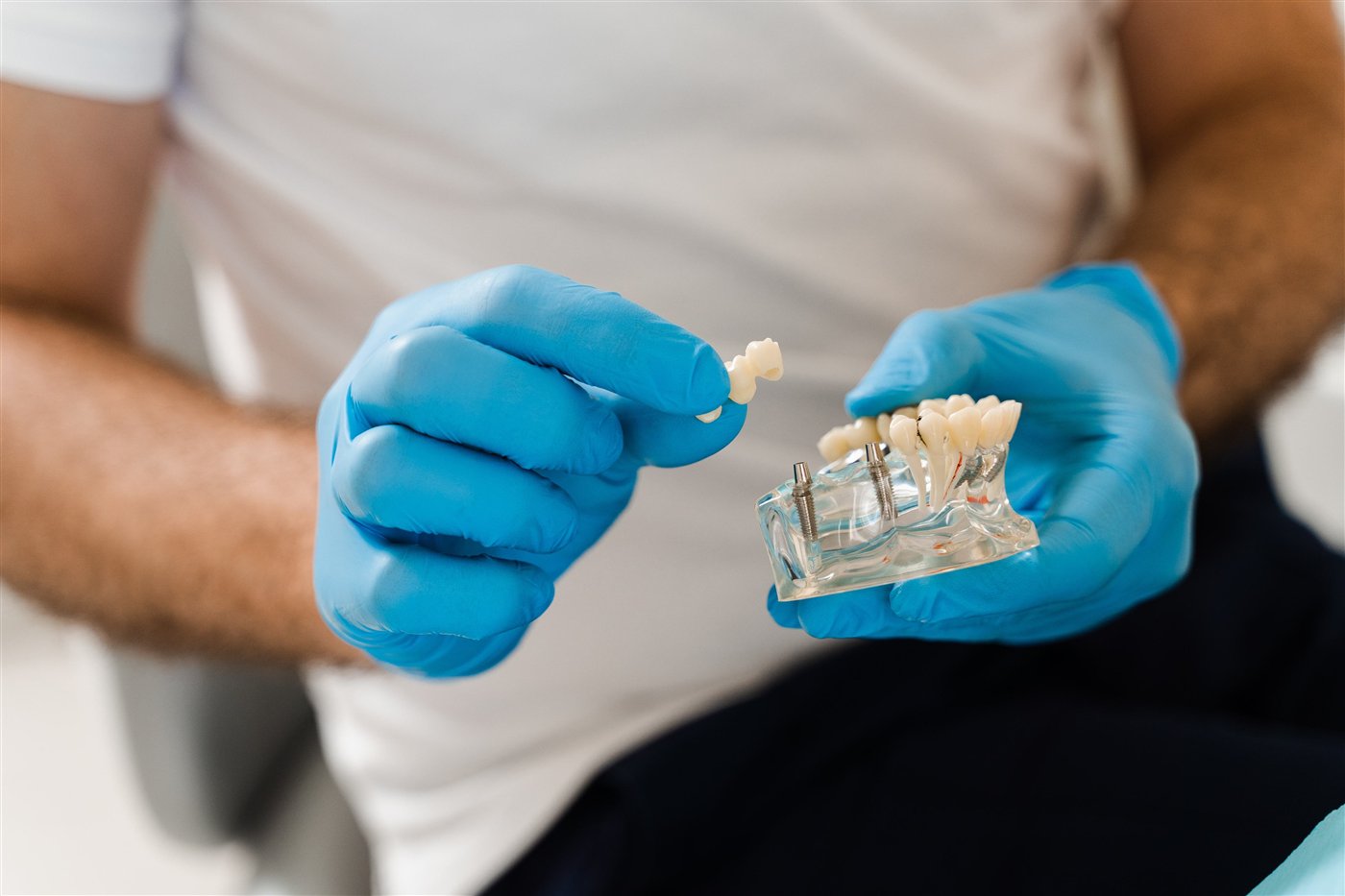
Crowns on the teeth beside the gap carry the replacement teeth between them. It is the faster, lower-cost option and suits neighbors that need crowns anyway, though anchor teeth must be shaped to take them.
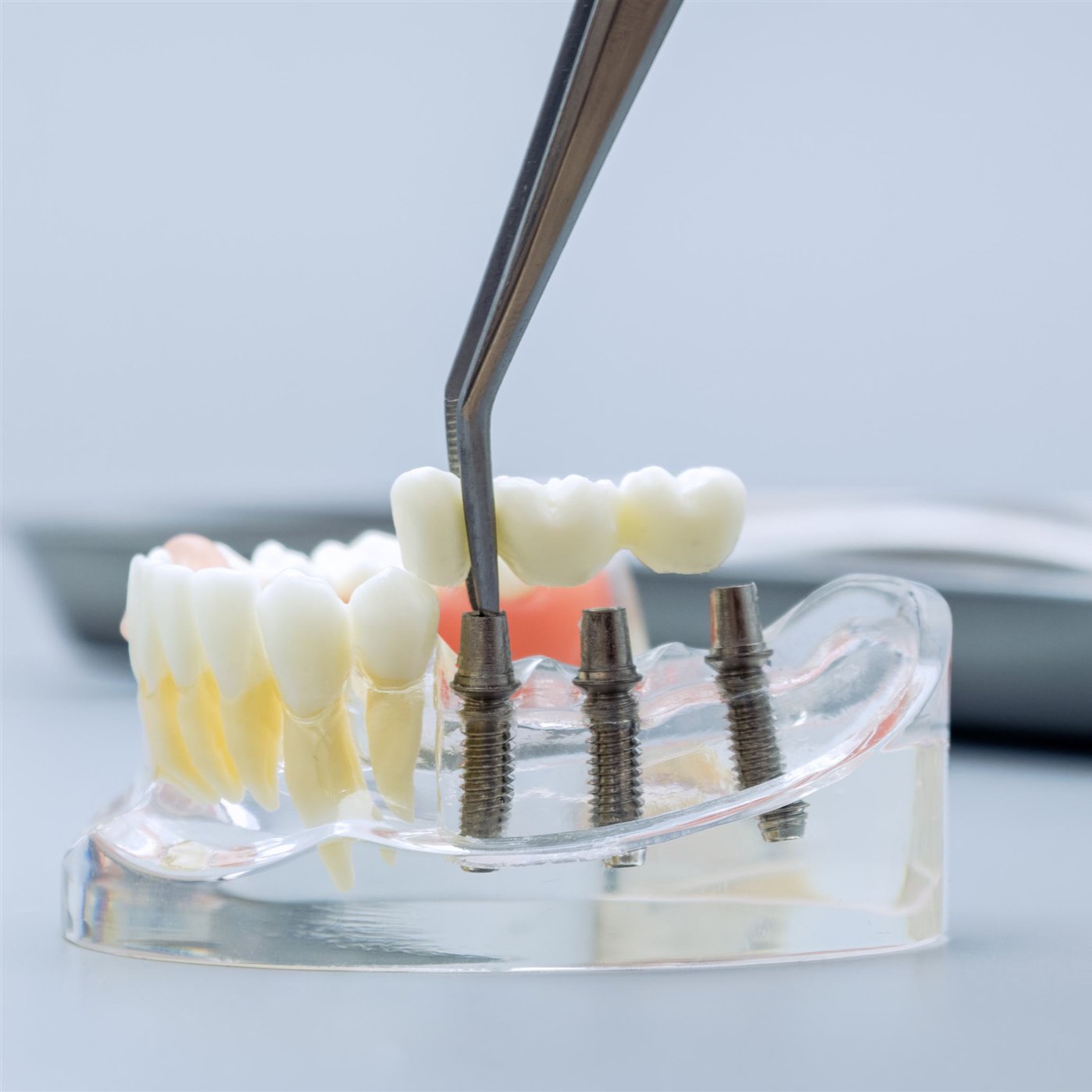
Typically, two implants placed here carry a bridge of three or four teeth, with no natural tooth touched. It takes implant surgery and a few months of healing first, and suits a longer gap or weaker anchor teeth.
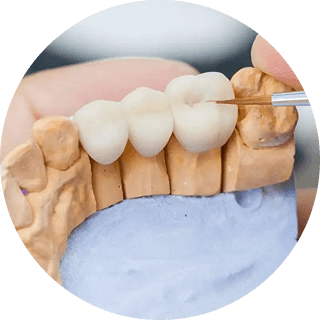
Every bridge is made by a dental lab from a digital scan, in tooth-colored ceramic shaded against your own teeth. A bridge cannot be whitened afterward, so if you want brighter teeth, whitening comes first.
As with our crowns, the bridge is cleaned after being placed to remove the saliva film that weakens cement, then primed so the cement bonds to the ceramic and teeth. This helps keep the anchor crown edges sealed.
A bridge spans several teeth, so a high spot loads the anchors unevenly. Dr. Magid checks your bite at cementing and at follow-ups, and adjusts the bridge until your teeth meet evenly along it.
A partial denture replaces teeth in several places along the arch, clips on, and comes out at night. A bridge replaces teeth in one row and stays in. Dr. Magid helps you choose what suits you.
Our Process
Step 1
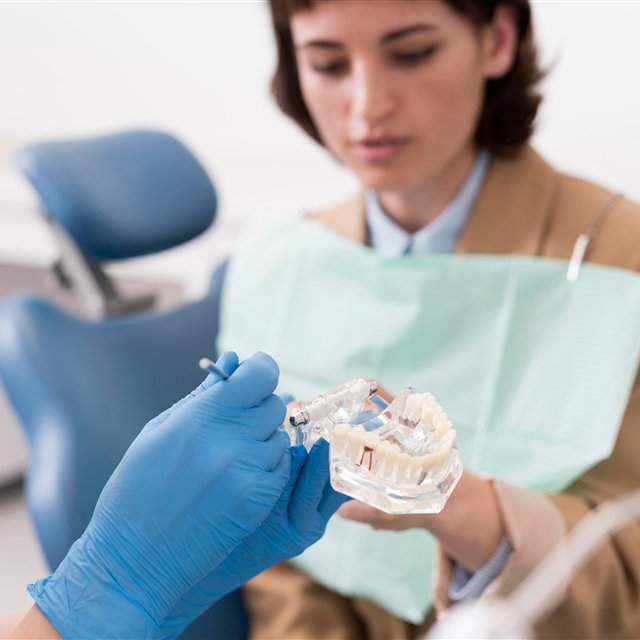
Dr. Magid examines the gap and the teeth beside it using an X-ray or 3D scan to check the roots and bone. He lays out a bridge and an implant side by side with a quote for each, and tells you when the anchor teeth are not strong enough for a bridge.
Step 2
For a traditional bridge, the anchor teeth are numbed and shaped, a digital scan goes to the lab, and a temporary bridge protects them while the lab works. For an implant bridge, the implants are placed first, and the bridge follows once they have healed.

Step 3
At the second visit, the lab-made bridge is placed to check the fit at both ends, the contacts, and the color. It is then cleaned, primed, and cemented; excess cement is cleared from the gum line, and your bite is checked across the whole bridge.
Step 4
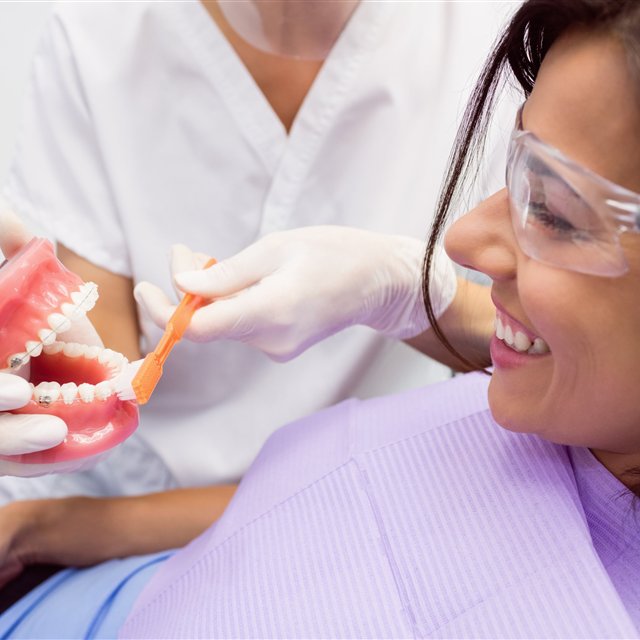
Food collects under the replacement tooth, so Jennifer shows you how to clean there with a floss threader or water flosser. Keep your six-month checkups so the anchor teeth are checked, and let us see a loose or chipped bridge the same day.
FAQ
Learn what a bridge costs, how many teeth it can replace, how long it lasts, whether it comes out, and how to clean it.
A bridge is priced by its units, each anchor crown and each replacement tooth counting as one, and an implant bridge adds the implants. Your itemized quote follows the exam. We are in-network with Delta Dental, and CareCredit and Cherry financing are available.
Usually one or two, and up to three or four in a row when the anchor teeth are strong, or implants carry the bridge. A longer bridge loads its supports more, so long traditional bridges need solid anchors. For a longer gap, Dr. Magid can show you an implant-supported design.
In most cases, for many years and often more than a decade. A bridge usually ends with decay at an anchor crown edge or a fractured anchor tooth, so daily cleaning under it, flossing the anchors, six-month checkups, and a nightguard if you grind help it last. The implants in an implant bridge cannot decay.
No. A bridge is cemented in place, and only a dentist removes it. The appliance that comes out is a partial denture, which clips onto your teeth and is removed at night, while a bridge stays in. Dr. Magid will tell you which option suits your mouth and budget.
Once a day, use a floss threader, a small interdental brush, or a water flosser, because the space under the replacement tooth traps food that brushing cannot reach. Floss the anchor teeth as usual. Jennifer shows you the routine at the fitting and checks the anchors at every cleaning.
No. Whitening gel works on natural enamel, so a bridge stays the shade it was made. To brighten your smile, whiten first and have the bridge matched to the new shade. We plan the order of treatment before you start, so crowns, veneers, and bridges blend with your teeth.

Conveniently Located Near You
Located in a serene colonial medical building on Clinton Road, our office is designed for effortless visits. Enjoy a first-floor suite, free on-site parking, and a wheelchair-accessible entrance, so you can step straight into dental care that is focused on you.

First-Floor Suite

Free On-Site Parking

Wheelchair Accessible