
Dental Bridges – West Caldwell, NJ
Getting Rid of Your Smile Gaps
All cases of tooth loss are bad, but some are definitely worse than others. Losing multiple adjacent teeth – not just one – is key proof of this oral health fact. With that said, we at Dr. Magid’s office still have you covered; our office can provide you with dental bridges in West Caldwell! These prosthetics can “bridge” your grin’s unwanted gaps, restoring your smile to working order. Just keep reading to learn about them or book a consultation soon.
Why Choose Magid Dental Care for Dental Bridges?
- In-House Implant Surgery Available
- Durable, High-Quality Materials
- Digital Dental Impression System
What is a Dental Bridge?
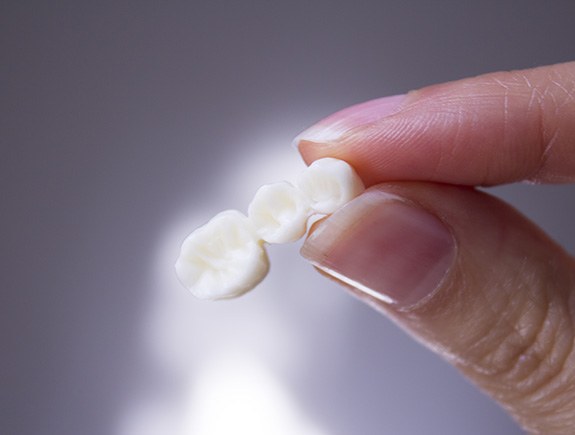
In essence, a dental bridge is a unique device that replaces lost teeth. It usually consists of varied materials fused to either side of a “pontic” or artificial tooth. Thanks to this design, a bridge can restore anywhere from one to four missing neighboring teeth.
The best dental bridge candidates are those lacking adjacent teeth. After all, these people can have their smiles restored with one treatment; they often don’t need follow-up work. Qualifying for a dental bridge is otherwise simple; you just need decent oral health.
Types of Dental Bridges
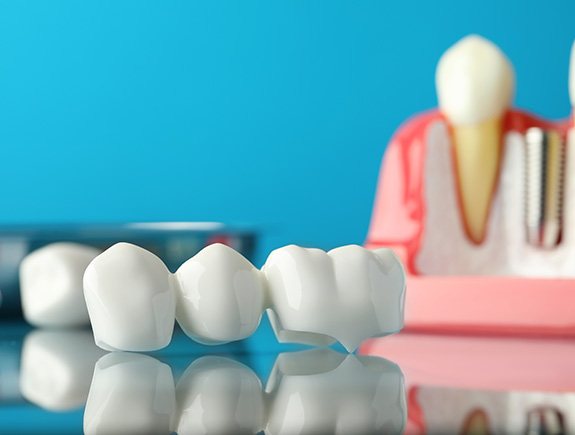
Before you get a dental bridge, you’ll need to meet Dr. Magid. He can then check your smile to see whether care would suit you. If he thinks it would, we’ll draft a custom treatment plan for you.
Our team may suggest one of two types of dental bridges to you, depending on Dr. Magid’s findings. These are:
Traditional Dental Bridge
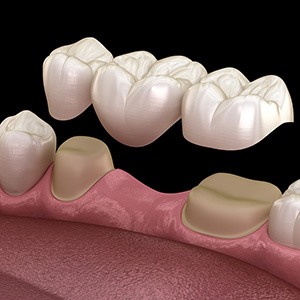
Per its name, the traditional dental bridge is the kind that’s been around for decades. It uses two (or more) dental crowns fused to either side of an artificial tooth. That being the case, it relies on nearby natural teeth or “abutments” to remain stable.
A traditional bridge often doesn’t cost much, so it’s ideal for patients on smaller budgets. Still, a dentist has to alter your nearby teeth for the placement process.
Implant Bridge
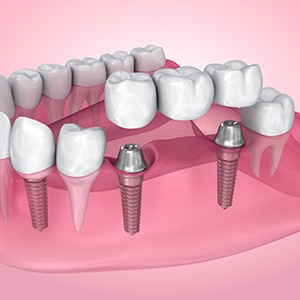
Unlike the typical kind, an implant bridge secures itself with dental implants. These small titanium posts fuse with your jaw tissue once placed, ensuring the whole device remains stable. A dental bridge connected to them should remain functional for a few decades or more.
Implant bridges don’t alter your existing teeth, but they cost more as a result. You should keep this in mind as you consider your options.
The Benefits of Getting a Dental Bridge

With a dental bridge from Dr. Magid, you’d enjoy amazing perks like:
- A Natural Appearance – Because they’re capped with porcelain (or similar tooth-colored materials), dental bridges blend seamlessly with your smile.
- Better Oral Health – By filling your smile’s gaps, a dental bridge reduces the spread of harmful bacteria in your mouth. It also stops your other teeth from tilting.
- Easy Eating – Using a dental bridge’s artificial teeth, you can chew a wider range of foods than you could before.
- Enduring Effects – Due to their durable materials, dental bridges last an average of 5-15 years and work for 20+ years when given good care.
Dental Bridges FAQs
Can You Take a Dental Bridge Out?
No, you cannot take a dental bridge out yourself. They are designed to remain securely in place in your smile for many years after placement. Only a dental professional can remove your dental bridge.
Some healthcare professionals may refer to a partial denture as a “removable bridge,” however this is not entirely accurate. Partial dentures are similar to dental bridges in that they can replace multiple teeth; however, partial dentures can be removed by the patient at any time, while dental bridges cannot.
Is a Partial Denture the Same as a Bridge?
No. Although partial dentures are sometimes referred to as “removable bridges,” they are not the same thing as a dental bridge.
A dental bridge is designed to remain in the mouth for many years and can only be removed by a dentist. However, a patient can easily remove a partial denture themself at any time.
The other main difference between the two prosthetics is that a dental bridge can only replace missing teeth that are in consecutive order, but partial dentures can replace several teeth at various points along the arch.
Bridges are also anchored in place via crowns that are fitted over two healthy “abutment” teeth, while partial dentures typically use metal clips or clasps that go behind natural teeth.
Your dentist can review your tooth replacement options with you at your consultation and help you decide which method will work best for your individual needs.
How Many Teeth Can a Dental Bridge Replace?
Depending on your specific needs, a dental bridge can replace anywhere from one to four missing teeth in a row. However, in most cases they only replace one or two. That’s because the longer the bridge extends, the less stable it becomes, especially if the natural teeth supporting it aren’t strong and healthy. Thus, it may become too risky to have a bridge replace three or more teeth.
Dental implant bridges can reduce this risk, as dental implants are just as strong and secure as natural teeth, if not stronger.
Can Dental Bridges Be Whitened?
No, unfortunately no matter the material your bridge is made of it cannot be whitened like your real teeth can. That’s because tooth enamel is comprised of tiny pores which allow powerful bleaching agents to enter and break up stains, but dental restorations like bridges do not. Thus, your dental bridge should always remain the same color.
Metal-free bridges are designed to blend seamlessly into your smile, matching your natural teeth as closely as possible. To minimize the risk of your natural teeth becoming discolored and making your dental bridge stand out, consider asking your dentist about getting your teeth professionally whitened prior to your bridge being placed. This way, your bridge can be matched to the ideal shade of your smile!